
The Nose That Changed Everything
My colleague came back from Seoul three weeks after her rhinoplasty. I didn’t recognize her at first — not because she looked fake or overdone, but because she looked like herself, except somehow more so. That’s the thing Korean surgeons chase that most Western surgeons don’t even talk about: harmony, not transformation.
And once you understand that, everything else about Korean rhinoplasty starts to make sense.
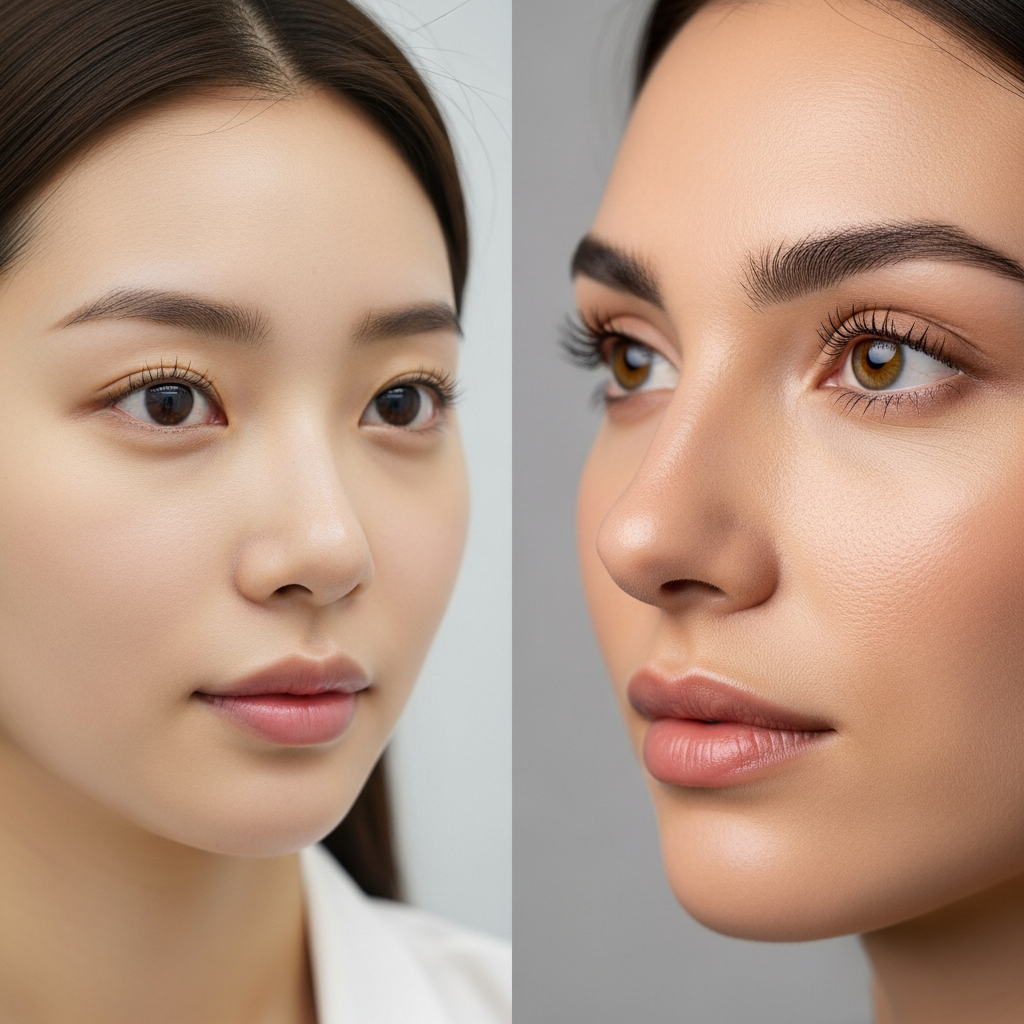
Every year, tens of thousands of patients — from the US, Southeast Asia, the Middle East, Australia — board flights to Seoul specifically for nose jobs. Not because Korean surgeons are cheaper (sometimes they’re not). Not because the clinics look fancier (though they often do). They go because Korean rhinoplasty is, structurally and philosophically, a different procedure than what you’d get in a Western operating room.
Thinner skin. Different bone structure. A completely different definition of what a “beautiful nose” means. These aren’t minor variables. They change the entire surgical approach — the technique, the materials, the goals.
I’ve watched consultations in Gangnam clinics where surgeons spent 45 minutes analyzing a patient’s facial thirds before touching a surgical plan. In contrast, I’ve heard from patients who got a five-minute pre-op conversation at a US practice. Neither is universally wrong. But they are not the same product.
Key Takeaways
- Korean rhinoplasty prioritizes facial harmony over isolated nose reshaping — surgeons analyze your whole face, not just the nose in isolation
- Asian nose anatomy — thicker skin, weaker cartilage, flatter dorsum — requires specialized techniques that most Western surgeons have limited experience with
- Implants (silicone, Gore-Tex) are far more commonly used in Korean rhinoplasty; Western surgeons tend to prefer cartilage-only approaches
- Seoul’s top rhinoplasty clinics — including Link Plastic Surgery, ID Hospital, and JW Plastic Surgery — see hundreds of international nose cases per year, creating a depth of specialization that’s genuinely hard to match elsewhere
- Cost in Korea typically runs $3,000–$8,000 USD depending on complexity; comparable quality in the US or UK often starts at $8,000–$15,000
- Medical tourism to Korea for rhinoplasty isn’t a trend — ISAPS data consistently shows South Korea has among the highest per-capita cosmetic surgery rates in the world
- Revision rates and patient satisfaction data generally favor surgeons who specialize in Asian rhinoplasty, particularly for patients with East or Southeast Asian facial features
So what actually separates Korean rhinoplasty from what you’d get in London, Los Angeles, or Toronto? The differences go deeper than geography. They’re rooted in anatomy, aesthetics, and a surgical philosophy that developed in response to a very specific patient population. And honestly, once you see the contrast clearly, it becomes obvious why so many people are buying plane tickets.
The Nose Job Conversation Nobody’s Having Honestly
Most rhinoplasty content online treats all nose jobs like they’re the same procedure with different price tags. They’re not. The philosophical difference between Korean rhinoplasty and Western rhinoplasty runs deeper than technique — it’s rooted in entirely different aesthetic goals, patient anatomy, and what surgeons are actually trained to prioritize.
I noticed this firsthand during a consultation visit at a Gangnam clinic a couple of years ago. The surgeon spent nearly 45 minutes just analyzing the patient’s facial proportions before touching any imaging software. He kept referencing something he called hwangeum birye — golden ratio alignment — applied specifically to East Asian facial geometry. The patient, who had previously consulted a board-certified surgeon in New York, told me the American consultation lasted about 12 minutes.
That difference matters.
What Korean Surgeons Are Actually Solving
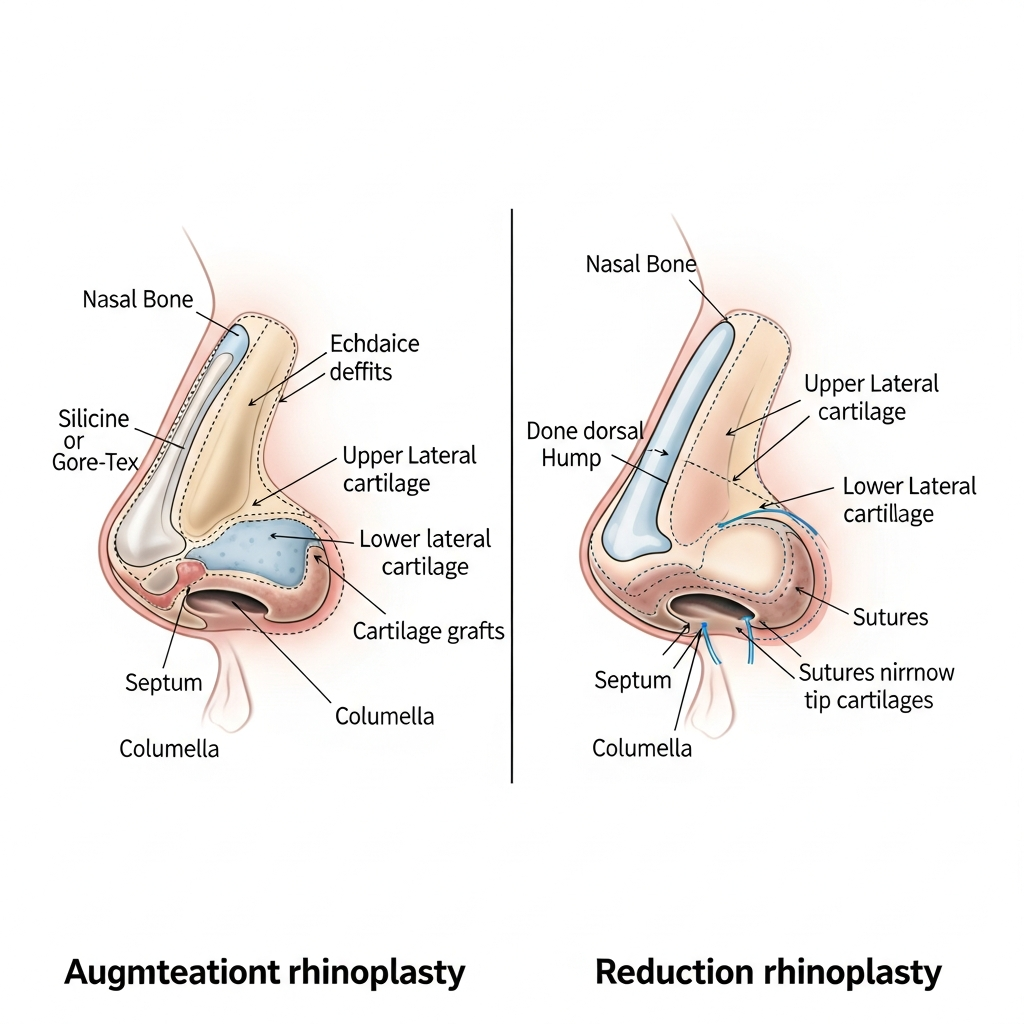
Korean rhinoplasty — and broader Asian rhinoplasty — typically addresses a low dorsal bridge, a flat or wide nasal tip, and limited projection. The goal isn’t reduction. It’s augmentation and refinement, which requires a completely different surgical toolkit than Western approaches.
Western rhinoplasty, by contrast, was largely developed to reduce. Reduce the bump. Reduce the size. Narrow the nostrils. Most foundational rhinoplasty textbooks were written with Caucasian anatomy as the reference point, and that shapes everything — the default incision approaches, the grafting philosophy, even what “natural” means post-op.
So when a surgeon trained primarily in Western techniques attempts an augmentation rhinoplasty on Asian anatomy, the results can look off. Not bad, necessarily — but off. Like a sentence translated too literally from another language.
The Implant vs. Cartilage Graft Debate
This is where most surgeons disagree most loudly.
Korean surgeons have historically favored silicone implants for dorsal augmentation — they’re precise, consistent, and revisionable. Many top Gangnam surgeons have placed thousands of them with strong long-term outcomes. But the global consensus has been shifting toward autologous cartilage (your own cartilage, harvested from the ear or rib) because it integrates with your tissue and carries lower infection or migration risk over decades.
Most high-volume clinics in Seoul now offer both, and the best surgeons tailor the choice to the individual. Rib cartilage for patients wanting significant projection. Silicone for moderate augmentation with simpler recovery. Some combine a cartilage tip graft with a silicone dorsal implant — which sounds intense but is actually quite common.
Western surgeons generally lean toward cartilage grafting across the board, partly due to liability culture and partly because augmentation cases are less common in their patient mix.
Cost: What You’re Actually Paying For
The numbers are stark.
| Procedure Type | South Korea (Seoul) | United States | United Kingdom |
|---|---|---|---|
| Augmentation rhinoplasty (silicone dorsal) | $3,500 – $6,000 | $8,000 – $14,000 | $7,000 – $12,000 |
| Augmentation + cartilage tip graft | $5,000 – $9,000 | $12,000 – $18,000 | $10,000 – $16,000 |
| Rib cartilage rhinoplasty | $7,000 – $12,000 | $15,000 – $25,000 | $13,000 – $20,000 |
| Revision rhinoplasty | $6,000 – $15,000 | $14,000 – $30,000+ | $12,000 – $25,000 |
And those Korean prices typically include anesthesia, facility fees, post-op care, and follow-up consultations. In the US, those line items are often billed separately.
The math explains a lot about why medical tourism to Seoul has grown consistently. ISAPS data consistently ranks South Korea among the highest per-capita cosmetic surgery rates globally, and a significant chunk of those patients aren’t Korean nationals.
What Recovery Actually Looks Like
One session. That’s it — rhinoplasty is a single surgery, not a multi-session treatment.
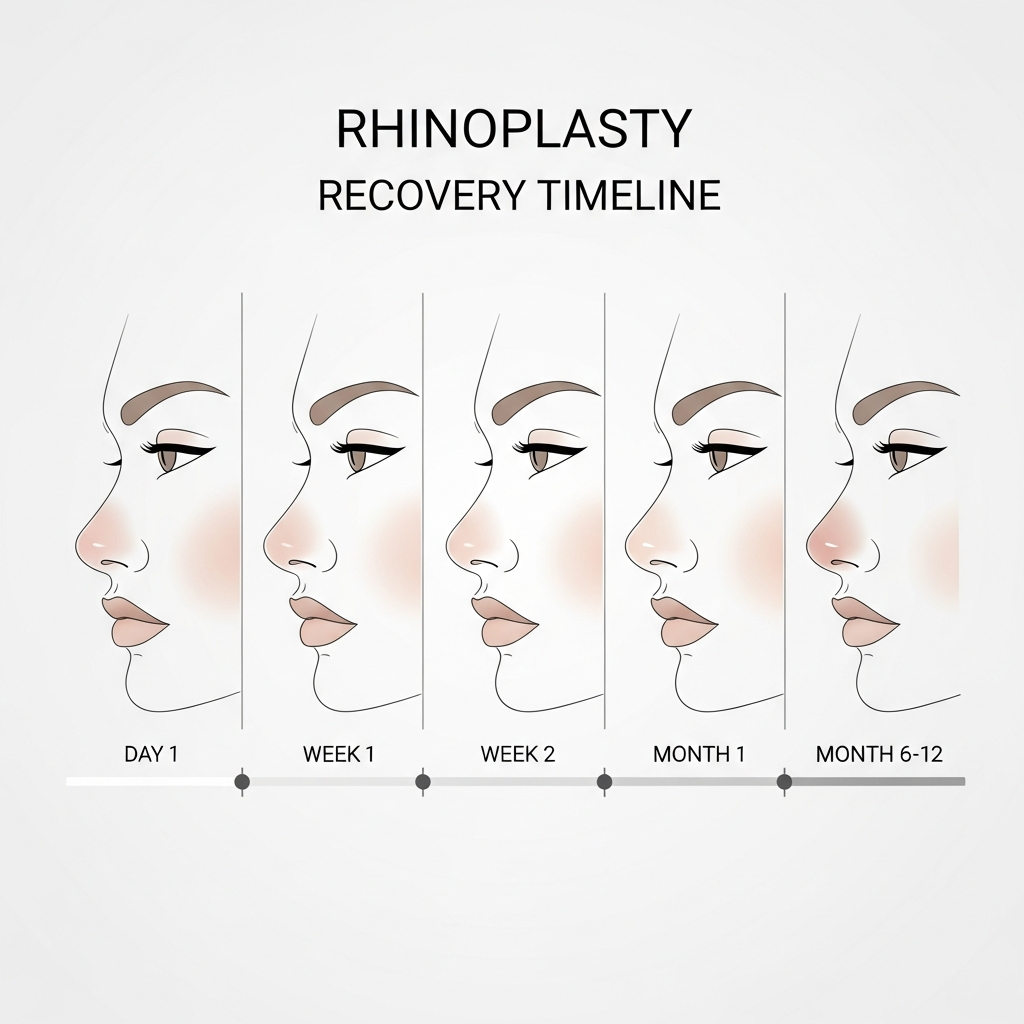
Recovery timelines are broadly similar regardless of geography. Expect significant swelling for 2–3 weeks, cast or splint for 7–10 days, and social presentability somewhere around week 2–3. Full swelling resolution — especially at the nasal tip — takes 6 to 12 months. Anyone who tells you otherwise is being optimistic.
Surgery time runs 1.5 to 4 hours depending on complexity. Rib cartilage cases take longer. Most Seoul clinics discharge patients the same day.
The practical consideration for international patients: you’ll want to stay in Seoul for at least 10–14 days post-op for the first follow-up and cast removal. Many clinics have partnerships with nearby guesthouses or serviced apartments specifically for this.
Choosing a Clinic: What the Lists Don’t Tell You
Gangnam has hundreds of rhinoplasty clinics. Some are exceptional. Some are not.
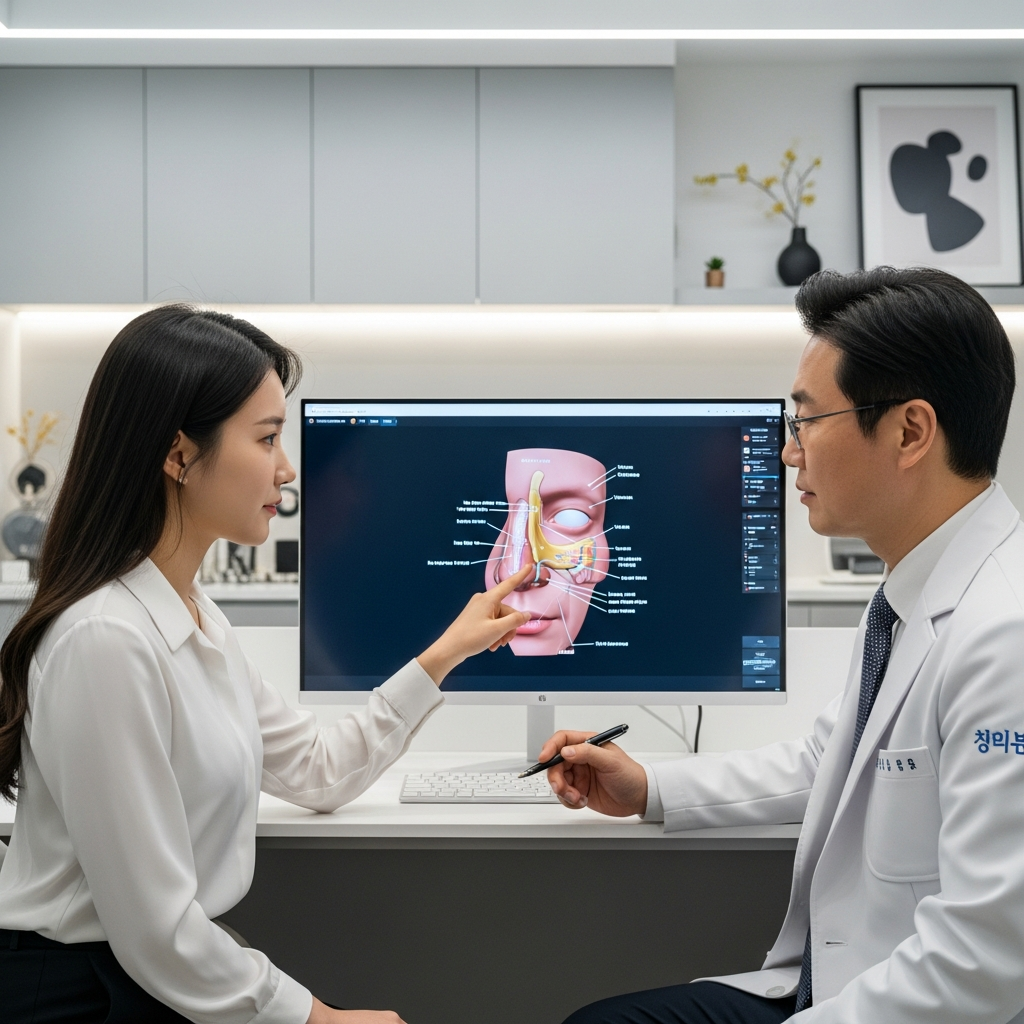
The ones worth considering for Asian rhinoplasty have a few things in common: surgeons with dedicated rhinoplasty specialization (not generalist plastic surgeons doing everything), a real portfolio of before/afters that includes patients with your anatomical type, and a consultation process that actually involves the surgeon — not just a coordinator with a tablet.
Clinics that come up frequently in credible patient communities include Link Plastic Surgery, ID Hospital, The Face Dental & Plastic Surgery, and Banobagi. Each has a different volume, specialty focus, and price range — so comparing them directly without a consultation doesn’t mean much.
Personally, I’d weight surgeon specialization over clinic brand prestige. A well-known clinic name doesn’t automatically mean the specific surgeon you’re assigned to has performed 800 rhinoplasties. Ask directly. Most good surgeons won’t hesitate to answer.
And honestly, the consultation itself tells you most of what you need to know. A surgeon who listens more than they talk — who asks what bothers you rather than defaulting to a standard plan — is usually the one worth trusting with your nose.
Planning Your Trip: The Stuff They Don’t Put in the Brochure
Seoul doesn’t just hand you a perfect nose and send you home. There’s a whole process — consultations, recovery, follow-ups — and getting that sequence wrong is where things fall apart for a lot of medical tourists.
Start your research at least three months out. Not because the surgery itself takes that long to arrange, but because the consultation phase matters more than most people realize. Many reputable clinics in Seoul require an initial online consultation before you even book a flight. They’ll ask for photos, your medical history, and what you’re hoping to achieve. Take this seriously. A good surgeon who tells you your expectations aren’t realistic is doing you a favor.
Some clinics worth putting on your list: Link Plastic Surgery, JW Plastic Surgery, ID Hospital, and THE PLUS. All have English-speaking coordinators and documented experience with non-Korean patients. Do your own research on each — read real patient forums, not just the clinic’s own testimonials.
Book in-person consultations with at least two clinics once you arrive. Don’t commit to anyone based on online communication alone. The in-person dynamic tells you a lot — how rushed they make you feel, whether the surgeon actually listens, whether they try to upsell you on procedures you didn’t ask about.
Recovery: What You’re Actually Signing Up For
Week one is rough. That’s the honest answer.
Expect significant swelling, bruising under the eyes, and a cast or splint on your nose for the first 7-10 days. Breathing through your nose won’t really be possible for the first several days. A friend of mine who had rhinoplasty in Seoul described the first three nights as “sleeping upright with a face that feels like it belongs to someone else.” Not glamorous. But she also said by day ten, she was out exploring Hongdae — so perspective matters here.
Most clinics will schedule a post-op check-in at day 7 to remove the cast and assess early healing. This is why most surgeons recommend staying in Seoul for at least 10-14 days. Don’t try to fly home on day five. Cabin pressure, altitude changes, and the physical stress of travel too soon after surgery can increase swelling and — in rare cases — affect the implant position.
The swelling timeline for Korean rhinoplasty specifically tends to be a longer story than people expect. You’ll look reasonably “done” by week two or three. But the final result? Most surgeons say 6-12 months. The tip — especially if cartilage was used — takes the longest to settle. You’ll get glimpses of the end result, then swelling surges back after a long flight or a salty meal. It’s maddening. But it’s normal.
What Nobody Actually Tells You
The emotional rollercoaster catches people off guard.
Around weeks two to four, after the initial excitement fades and you’re back home with a nose that still looks swollen and unfamiliar — a lot of people hit a wall. They second-guess everything. I’ve seen this pattern described over and over in rhinoplasty recovery threads, and honestly, the clinics don’t prepare patients for it nearly enough. It’s not regret, necessarily. It’s the weird psychological weight of having changed something on your face while your brain hasn’t caught up yet.
Give yourself grace during this phase. Don’t obsessively compare your week-three nose to your surgeon’s “after” photos. Those are taken months later, in good lighting, after everything has settled.
The Real Risks — Don’t Skip This Part
Rhinoplasty in Korea is performed at high volume. That cuts both ways.
On the upside: surgeons operating at that volume develop skill sets that are genuinely hard to match. On the downside: not every clinic that markets aggressively to international patients delivers that level of skill. There’s a meaningful gap between Seoul’s top-tier rhinoplasty specialists and the mid-tier clinics that have invested more in their marketing than their surgical training.
Implant-specific risks are real. Silicone implants — still widely used in Korean rhinoplasty — carry a long-term risk of capsular contracture, shifting, or in rare cases, skin erosion at the tip. Most surgeons report these complications are uncommon with proper technique and placement, but they’re not zero. If any surgeon tells you implants are risk-free, walk out.
Revision rates for rhinoplasty — globally, not just in Korea — are among the highest of any cosmetic procedure. The nose is complex anatomy, healing is unpredictable, and patient satisfaction is deeply tied to expectations going in. Know this before you book.
And on the medical tourism side specifically: your follow-up care will happen at home with a doctor who didn’t perform your surgery and may not be familiar with the technique used. Build a relationship with a local plastic surgeon or ENT before you go. Someone who can see you if something feels wrong at week six, when your Seoul surgeon is on the other side of the world.

What to Actually Budget
Korean rhinoplasty costs vary — a lot. Simple tip refinement can start around $2,000-3,000 USD. Full structural rhinoplasty with implant and cartilage graft typically runs $4,000-8,000 depending on the clinic and complexity. Factor in flights, accommodation for 2 weeks, post-op care items, and at minimum one follow-up consultation at home — and you’re realistically looking at $6,000-12,000 total for the full trip.
Still often less than comparable surgery in the US or UK. But not as cheap as some of the clickbait articles make it sound.
Personally, I’d rather see someone budget realistically and go to a surgeon they’ve thoroughly vetted than rush the process to save $500 on accommodation. The surgery is permanent. The savings aren’t.
Real Questions, Straight Answers
Is Korean rhinoplasty actually better, or is it just hype?
Depends what “better” means to you. For East Asian noses — flatter bridges, rounder tips, thicker skin — Korean surgeons have spent decades refining techniques that Western surgeons rarely see in volume. A surgeon in Beverly Hills might do 200 rhinoplasties a year. A top surgeon in Gangnam does that many in two months, a significant chunk of them on Asian anatomy specifically. That repetition matters. A lot.
But if you have a high Caucasian bridge and want a subtle reduction? A skilled surgeon in London or New York is probably just as good. Korean rhinoplasty isn’t magic. It’s just extremely specialized for a specific anatomical profile.
I keep hearing Korean surgeons use implants and that terrifies me. Should it?
Honestly? It scared me too when I first heard about it. Silicone implants for bridges are standard in Korean rhinoplasty — not experimental, not second-best. They’ve been refining implant use for bridge augmentation since the 1980s. The infection and migration rates at reputable clinics are low.
That said, implants aren’t for everyone. Surgeons with thinner skin patients or those who had previous surgery often prefer rib cartilage grafts instead. The real answer is: find a surgeon who gives you options, not one who reaches for the same implant regardless of who sits in the chair.
My friend got a nose job in Seoul for like $4,000. Is that safe or is she about to regret everything?
Price alone tells you almost nothing. Seoul has a two-tier market: clinics that cater to medical tourists on a budget (high volume, cookie-cutter results, sometimes rushed) and surgeons with 10+ year waitlists who charge double that. Four thousand dollars can get you a genuinely excellent result at a mid-tier reputable clinic — or a disaster at a conveyor-belt operation in a basement of a Gangnam building. Check before-and-after portfolios obsessively. Read reviews on RealSelf and the Korean surgery community boards, not just Google. And avoid any clinic that promises natural-looking results in the same breath as a same-week appointment.
What about recovery? I’ve heard you have to stay in Korea for weeks — is that true?
Two weeks minimum is the realistic answer. Most surgeons want to see you at the one-week mark to remove splints and assess swelling. Flying home with a fresh rhinoplasty — cabin pressure, recycled air, nobody nearby if something goes wrong — is a bad idea. A friend of mine stretched her Seoul trip to three weeks and said it was the right call. She spent the first few days feeling like she’d been hit in the face with a book. By week two, she was shopping in Myeongdong with sunglasses on. By week three, she was almost back to normal-looking in public.
Budget the time. Skimp somewhere else.
[IMAGE: Side-by-side comparison of typical bridge augmentation results showing before and after Korean rhinoplasty on Asian anatomy, clinical setting, neutral background]
Can Western surgeons do the same techniques? Why do I need to fly to Seoul?
Some can. There are excellent Asian rhinoplasty specialists in Los Angeles, Toronto, and Singapore. But volume is the issue. The concentration of surgical experience in Seoul — specifically for East Asian anatomical profiles — doesn’t exist anywhere else on that scale. It’s not nationalism. It’s math. More cases means more refinement means better outcomes on average. And “on average” matters when it’s your face.
What if something goes wrong after I’m home?
This is the part nobody wants to talk about. Revision rhinoplasty is already complicated. Revision rhinoplasty when your original surgeon is 10 time zones away is a whole other problem. Most Korean clinics will consult via video and may offer follow-up surgery at a reduced cost if you return — but “may offer” is doing a lot of work in that sentence. Get everything in writing before you book. Ask explicitly about their revision policy. And identify a local surgeon who can at minimum assess complications before you ever get on a plane.
Recommended for Your Recovery
Products that patients commonly use before and after surgery in Korea.
- Arnica Montana Tablets — start 3 days before surgery to reduce bruising and swelling. Check price on Amazon
- COSRX Advanced Snail 96 Mucin Essence — gentle hydration for healing skin post-surgery. Check price on Amazon
- Silicone Scar Sheets — apply 2 weeks post-op to minimize incision scarring. Check price on Amazon
- Beauty of Joseon Relief Sun SPF 50+ — lightweight Korean sunscreen, essential for post-surgical skin protection. Check price on Amazon
As an Amazon Associate, GlobalBeautySpot earns from qualifying purchases.
Final Verdict
Personally, for East Asian anatomy — flat bridge, bulbous tip, thick skin — I’d pick a specialist in Seoul over most Western options. Not because Korea is inherently superior, but because the volume of experience with exactly that nose profile is unmatched. When I’ve spoken with patients who’ve had rhinoplasty both locally and in Korea, the difference in how naturally the surgeon discussed their specific anatomy was night and day.
For Western patients wanting reduction work or subtle reshaping? The equation isn’t as clear. A highly trained surgeon closer to home — with easier follow-up — might be the smarter choice. Seoul is worth the trip when the surgery genuinely requires that level of specialization. It’s probably overkill if you’re just trimming a bump.
The people who regret the Seoul trip are usually the ones who went for the cheapest option without doing their homework, or who expected a different ethnicity’s nose on their face. The ones who glow about it went in knowing exactly what they wanted, found a surgeon who understood their anatomy, and gave themselves enough time to heal. Do the research. Take the time. And if you do go — eat the Korean fried chicken. You’ll need the comfort food during week one anyway.
If you’re exploring clinics in Seoul, Link Plastic Surgery is one worth looking into — they work across both rhinoplasty and revision cases, and their consultation approach is more individualized than the high-volume factory model that dominates parts of Gangnam.
One Last Thing
Rhinoplasty — anywhere in the world — is a permanent decision on the most visible part of your face. Korean surgeons have genuinely earned their reputation, but reputation doesn’t replace research. Find a surgeon whose before-and-afters look like a face you’d want, not a face that looks like everyone else’s results. Go in knowing what you want. And give yourself the time to heal properly before you judge anything.
Your nose will still be there long after the Instagram post fades.