
The Practical Stuff Nobody Puts in the Brochure
So you’ve decided. Seoul it is. Now what?
Booking a facelift abroad isn’t like booking a vacation. There’s a specific rhythm to it, and if you get the timing wrong, you’ll either waste money or — worse — compromise your results. I’m going to walk you through exactly what the process looks like, week by week, including the parts that aren’t on any clinic’s FAQ page.
Before You Fly: The 4–6 Week Runway
Most reputable clinics in Seoul want a virtual consultation first. Not a chatbot. An actual video call with a surgeon or coordinator. Clinics like Banobagi, Link Plastic Surgery, THE PLUS, and View Plastic Surgery all offer these — usually free, sometimes with a small deposit that goes toward your procedure fee.
Send photos. Front, both profiles, 45-degree angles, no makeup, hair pulled back. Harsh lighting. You want the surgeon to see reality, not your best angle. A good clinic will send back a rough treatment plan within a few days. A great clinic will tell you what they won’t do.
Red flag? Any clinic that quotes you an exact price before seeing your face on a call. Facelift pricing in Korea depends heavily on technique — a mini-lift, a SMAS lift, a deep plane lift — they’re wildly different procedures at wildly different price points.
Get your bloodwork done at home before you leave. Most Korean clinics require it anyway, and doing it stateside saves you a day of waiting in Seoul. Basic panel: CBC, coagulation, thyroid. Your primary care doctor can order these.
Your Seoul Timeline: Plan for 14 Days Minimum
I cannot stress this enough. Do not book a 7-day trip for a facelift.
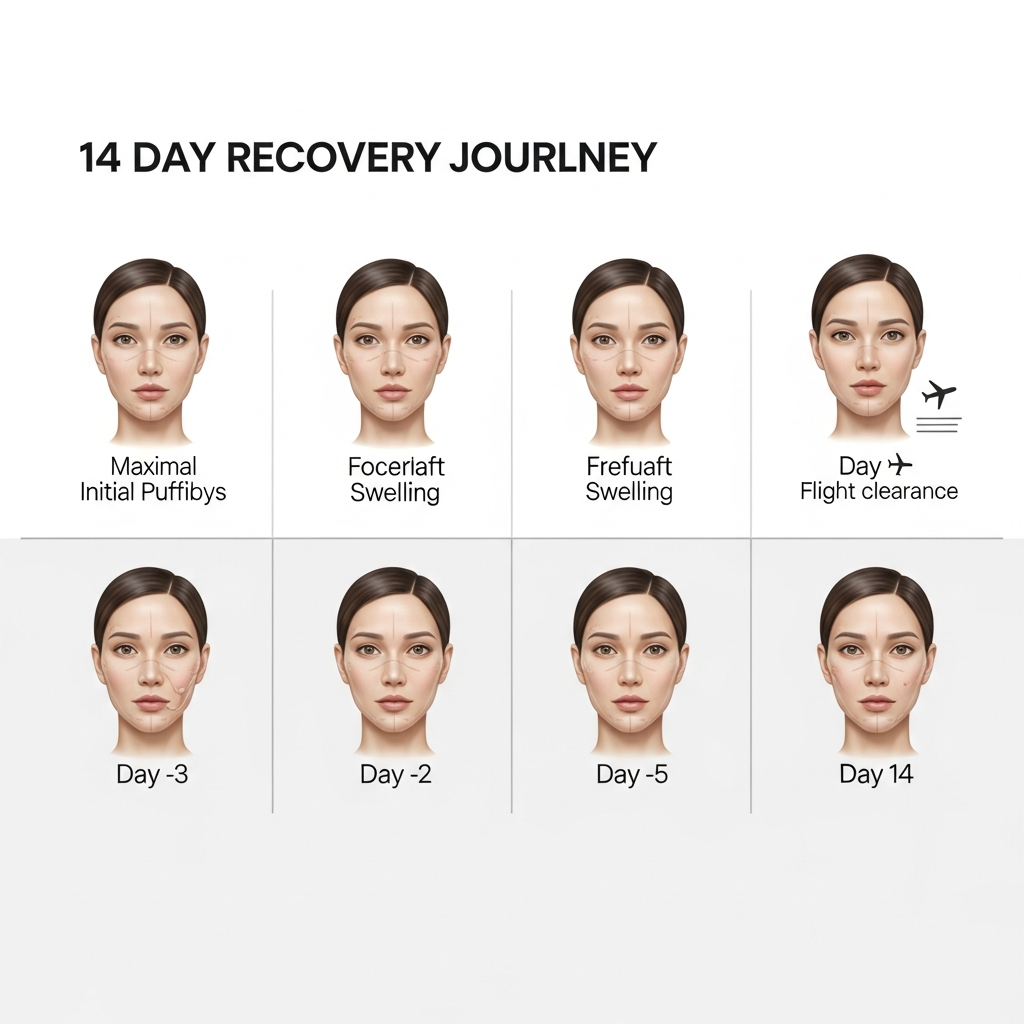
Here’s a realistic breakdown:
- Day 1–2: Arrive, adjust to the time zone, in-person consultation
- Day 3: Surgery day (you’ll spend one night at the clinic or a recovery center)
- Day 4–7: Peak swelling. You will look terrifying. This is normal.
- Day 7–8: Stitch removal, first post-op check
- Day 9–12: Swelling starts to subside but you still won’t look “normal”
- Day 13–14: Final check, clearance to fly
Some people push it to 10 days. Personally, I think that’s cutting it uncomfortably close. One complication — even a minor one like a seroma — and you’re scrambling to change flights while your face is held together with surgical tape.
What Nobody Tells You: The Recovery Housing Situation
This is the part that catches people off guard.
After surgery, you’re not going back to some cute Airbnb in Gangnam and ordering room service. Well, you can. But most experienced medical tourists choose a recovery center — called 조리원 (joriwon) style facilities or simply “aftercare centers” — that cater specifically to post-op patients. They change your dressings. They bring you soup you can actually eat when your jaw feels like concrete. They monitor you overnight.
Cost runs about $100–$200 per night. Some clinics include a few nights in their package. Others don’t. Ask upfront. And I mean actually ask — don’t assume it’s included because the brochure says “full-service care.” I’ve heard from patients who showed up expecting a recovery room and were handed a list of nearby hotels instead.
Gangnam has dozens of these centers clustered around the medical district. Many have English-speaking staff, but “English-speaking” in practice often means one coordinator who works 9-to-5. Evenings and weekends, you might be communicating through Papago (Korea’s version of Google Translate — download it before you go, it’s significantly better for Korean).
Pain, Swelling, and the Emotional Rollercoaster
Let’s be honest about pain. Surgeons will tell you it’s “manageable.” Patients describe it differently.
Days 1–3 after a SMAS or deep plane facelift: intense tightness, like someone’s pulling your skin backward with both hands. Throbbing around the ears. Sleeping upright because lying flat makes your face feel like it’s going to explode. Most Korean clinics prescribe solid pain management — stronger than what you’d typically get in the U.S. post-op, actually — but you’ll still be uncomfortable.
Days 4–7: the bruising peaks. Your neck might turn yellow-green. Your jawline disappears under swelling. A friend of mine FaceTimed me on day 5 after her mini-lift in Gangnam and legitimately looked like she’d been in a car accident. Six weeks later? She looked ten years younger. But that day-5 photo haunted her.
And here’s what really gets people — the emotional crash around day 4 or 5. Anesthesia leaving your system, pain meds messing with your mood, being alone in a foreign country with a swollen face. It hits hard. Many patients describe crying for no reason. Feeling instant regret. Wondering why they did this. It passes. But nobody warns you about it, and when you’re alone in a recovery room in Apgujeong at 2 AM, “it passes” doesn’t feel very comforting.
Bring a friend if you can. Seriously.
The Risks — Specific to Getting It Done Abroad
Every surgery carries risk. But doing it in Korea adds a few layers you wouldn’t deal with at home:
Language barriers during complications. Your surgeon speaks English. Great. But the ER nurse at 11 PM on a Saturday? Maybe not. If something goes wrong after hours, communication becomes a real challenge. Some clinics provide 24/7 English hotlines. Confirm this. In writing.
Flying with fresh incisions. Cabin pressure and dry air aren’t ideal for healing tissue. Most surgeons clear you to fly after 10–14 days, but the flight itself — especially a 12-hour transpacific one — can increase swelling temporarily. Compression garments on the plane. Aisle seat. Stay hydrated. Get up and walk every hour.
Follow-up care at home. This is the big one. Your Seoul surgeon can’t check on you at 6 weeks post-op in person. Most offer video follow-ups, but if you need a revision or develop a complication at week 3, you’ll need to find a local surgeon willing to manage someone else’s work. Many won’t. Establish this relationship before you leave — find a board-certified facial plastic surgeon at home who agrees to see you post-op. Tell them your surgical plan. Get their buy-in. Don’t skip this step.
Ghost surgery. This is a real concern in Korea. It means a different surgeon — not the one you consulted with — performs your procedure while you’re under anesthesia. It’s illegal, but it happens. Ask directly: “Will you personally perform the entire surgery?” Get it in the consent form. Reputable clinics will have no issue with this question. Any hesitation is your answer.
What to Pack (That You Won’t Find on Pinterest Lists)
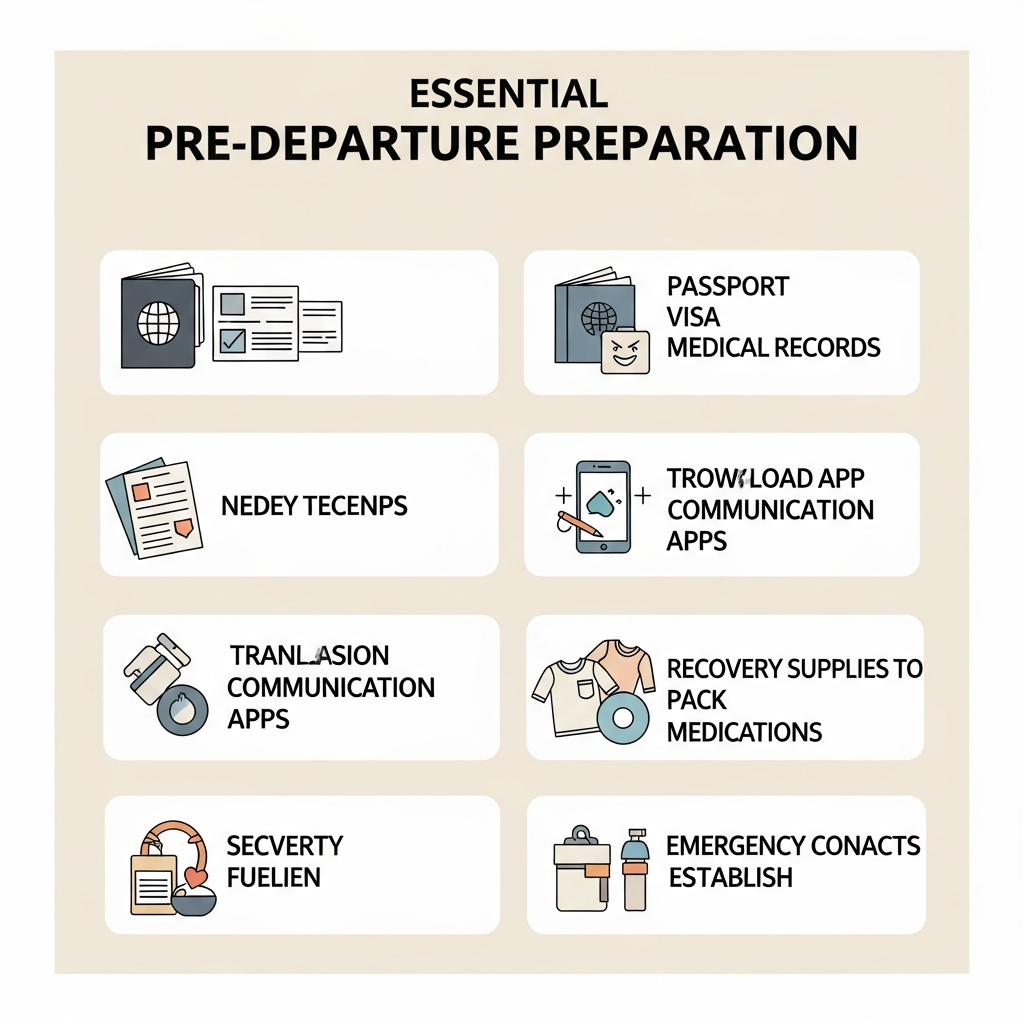
Beyond the obvious — loose button-up shirts, neck pillow, medications — here’s what experienced medical tourists actually recommend:
- A portable bidet bottle. You’ll be on painkillers. Painkillers cause constipation. Enough said.
- Protein shakes or meal replacement powder. You won’t want to chew for days. Korean recovery food is mostly soup and porridge, which is great, but having familiar options helps mentally.
- A small handheld mirror with good lighting. Recovery room mirrors are often dim or poorly placed. You’ll want to check your incision sites.
- Arnica gel and bromelain supplements. Most surgeons are neutral on these — not proven in major studies, but patients swear by them for bruising. Start a few days before surgery if your surgeon approves.
- Cash. More than you think. Korea is increasingly card-friendly, but some recovery centers, pharmacies near clinics, and medical supply shops prefer cash. 500,000 won ($350–$400) in reserve is smart.
And bring entertainment. Lots of it. You’ll be sitting in a recovery room for days with limited mobility and a face that makes you not want to be seen in public. Podcasts, audiobooks, an entire K-drama series — whatever keeps you sane. One patient told me she watched all 16 episodes of Crash Landing on You during her recovery and said it was “the best part of the whole trip.” Her words, not mine.
FAQs: Real Questions From People Who’ve Actually Looked Into This
Wait — is it actually safe to get a facelift in another country? What if something goes wrong?
Valid concern. Korea isn’t some back-alley situation, though. Seoul has more board-certified plastic surgeons per square mile than probably anywhere on Earth. The big clinics in Gangnam — we’re talking JCI-accredited facilities with full surgical suites, anesthesiologists on staff, overnight recovery rooms. Most surgeons trained at top Korean medical schools and many did fellowships in the US or Europe. Complications can happen anywhere, but Korean clinics handle an absolutely massive volume of facelift procedures. That repetition matters. A surgeon who does 300 facelifts a year is going to be sharper than one doing 30. The real risk? Picking a clinic based on a flashy Instagram page instead of doing actual research.
How much am I actually saving compared to getting it done in the US?
Depends on the procedure and surgeon. But rough ballpark: a full SMAS facelift in the US runs $15K–$40K (surgeon fee alone — add facility, anesthesia, you’re looking at more). In Seoul, the same procedure at a reputable clinic lands somewhere between $8K–$20K. Mini facelifts are cheaper on both sides. And Korean pricing usually bundles everything — consultation, surgery, anesthesia, follow-ups, sometimes even hotel stay. No surprise $3,000 “facility fee” showing up on your bill three weeks later. So yeah, even after flights and accommodation, most people save 30–50%.
Do I need to speak Korean? How does the consultation even work?
Nope. The major clinics catering to international patients all have English-speaking coordinators. Some have Japanese, Chinese, Russian staff too. Your coordinator handles everything — booking, translating during consultations, post-op instructions. I’ve sat in on consultations where the coordinator was so seamless you’d forget the surgeon wasn’t speaking English directly to you. One thing though: bring reference photos. Showing what you want transcends any language barrier.
How long do I actually need to stay in Seoul for recovery?
Plan for 10–14 days minimum. Seriously. Don’t try to squeeze this into a week. You’ll need stitches out around day 7, a follow-up check around day 10–12, and honestly you’ll still be swollen. Most people feel okay to walk around Myeongdong by day 5 or 6 — just don’t expect to look camera-ready. Some clinics partner with recovery guesthouses nearby, which is actually brilliant. Other patients recovering, staff who check on you, meals included. Way better than sitting alone in a hotel room googling “is this bruising normal” at 2 AM.
What if I need a revision or have complications after I fly home?
This is the part nobody talks about enough. Most reputable Korean clinics offer free revisions within a certain window — typically 6 months to a year. But “free revision” still means another flight to Seoul, another hotel stay, another week off work. That cost adds up fast. Before you book, ask the clinic specifically: what’s your revision policy? Do you offer virtual follow-ups? Can a local surgeon handle minor issues under your guidance? Get it in writing. A friend of mine had minor asymmetry after a lower facelift and the clinic did a video consultation, then coordinated with her dermatologist back in LA for a small touch-up. Not every clinic does that — but the good ones will.
Is “medical tourism” just a fancy word for cheap surgery?
Cheap? No. More affordable? Yes — and there’s a massive difference. Korean surgery isn’t cheaper because they’re cutting corners. It’s cheaper because of how the healthcare system is structured, lower malpractice insurance costs, and insane competition between clinics. Gangnam alone has hundreds of plastic surgery clinics within walking distance of each other. That competition drives prices down AND quality up. ISAPS consistently ranks South Korea as having the highest rate of cosmetic procedures per capita globally. These surgeons are doing your exact procedure multiple times a week. You’re not getting a discount. You’re getting efficiency.
Botox and fillers too — or just big surgeries?
Oh, people absolutely fly to Korea for injectables. Botox in the US averages $12–$18 per unit. In Seoul? $3–$8 per unit at most clinics. Filler same story — about half the US price. Now, does it make financial sense to buy a plane ticket just for Botox? Probably not on its own. But if you’re already there for a facelift? Load up. Get your Botox, your filler touch-ups, maybe a round of Rejuran or Juvelook (both wildly popular in Korea before they even hit US markets). Stack your treatments and the trip practically pays for itself.

Recommended for Your Recovery
Products that patients commonly use before and after surgery in Korea.
- Arnica Montana Tablets — start 3 days before surgery to reduce bruising and swelling. Check price on Amazon
- COSRX Advanced Snail 96 Mucin Essence — gentle hydration for healing skin post-surgery. Check price on Amazon
- Silicone Scar Sheets — apply 2 weeks post-op to minimize incision scarring. Check price on Amazon
- Beauty of Joseon Relief Sun SPF 50+ — lightweight Korean sunscreen, essential for post-surgical skin protection. Check price on Amazon
As an Amazon Associate, GlobalBeautySpot earns from qualifying purchases.
Final Verdict
I’ll be straight with you. Flying to Seoul for a facelift makes sense for a very specific type of person. Someone who’s done their research — not just watched three YouTube vlogs. Someone comfortable traveling internationally while recovering from surgery. Someone who has 2 weeks they can genuinely take off without stress.
If that’s you? The value proposition is strong. You’ll likely save $5K–$15K depending on the procedure, get treated by a surgeon with enormous case volume, and recover in a city that has literally built an industry around making this process seamless for foreign patients.
But if you’re anxious about being far from home during recovery, or you’d need to rush back for work by day 7, or you picked a clinic because it was the cheapest quote on some medical tourism website — don’t do it. Get it done locally with a surgeon you trust. Peace of mind has real value too.
Personally? For a major procedure like a full facelift, I’d go Seoul — but only after at least two virtual consultations, checking real patient reviews (not the ones on the clinic’s own website), and confirming the revision policy. For something minor like Botox alone, save your airfare and find a good injector near you.
So, Should You Book That Flight?
Seoul isn’t a magic fix and it’s not for everyone. But for the right person with the right preparation, it’s genuinely one of the best places in the world to get this done. Do your homework. Talk to people who’ve been. And whatever you decide — don’t rush it. Your face will thank you for taking the extra time to get it right.
Considering a procedure in Korea?
Get a free consultation with top-rated clinics in Seoul. We help you find the right surgeon for your goals.